SEOquake: A Free Chrome Extension for Quick On-Page SEO Checks
Not every SEO question needs a full audit platform. Sometimes you are simply browsing a competitor's landing page, or looking at an article that is outranking yours for no obvious reason, and all you actually want to know is what is going on with that page. That is the exact gap SEOquake fills, and it recently got rebuilt from the ground up to work better alongside AI-powered search results.
What SEOquake Actually Is
SEOquake is a free Chrome extension, built and maintained by Semrush, that checks a page's SEO fundamentals without leaving the browser. Roughly 1.16 million users run it in Chrome every week, which makes it one of the most widely installed SEO tools available. It is worth being clear about what it is not, too. SEOquake analyses the single page you are currently viewing. It is not a full site crawler, and it does not try to be one.
Core on-page analysis works without creating a Semrush account. Connecting one simply extends the workflow with deeper backlink and traffic data where available, rather than gating the basic features behind a paywall.
What It Checks
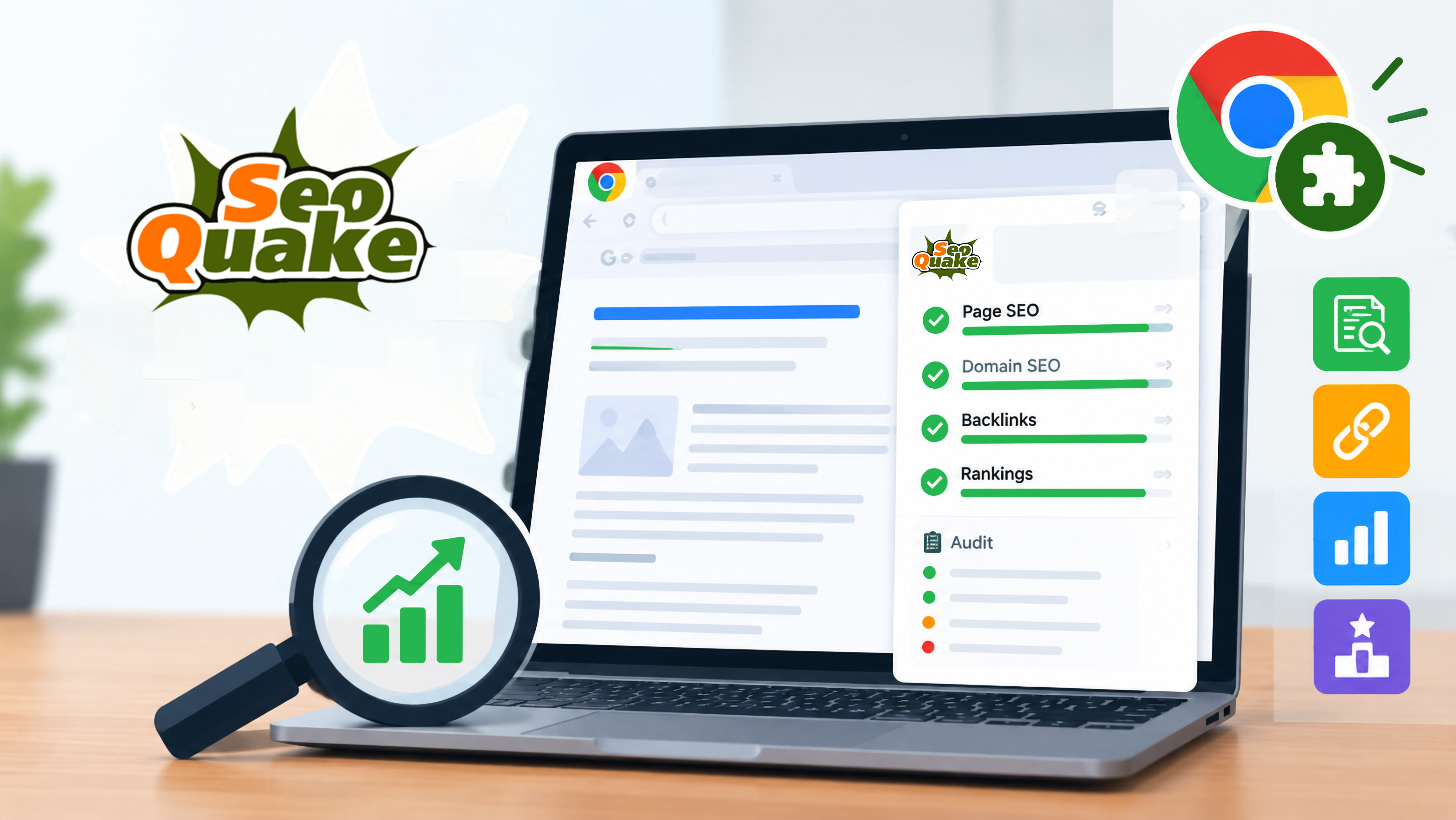
Clicking the toolbar icon opens a Quick View with five tabs covering the fundamentals: page info, content structure, a 28-point audit, schema and social metadata, and public Semrush metrics.
The Page Info tab alone tends to answer most "why isn't this page ranking" questions, since it surfaces title and meta description length, heading and link counts, canonical URL, and robots.txt status in one view. The Content tab breaks down the heading structure and keyword density, which is genuinely useful when reviewing how a competitor has structured a page around specific search intents rather than just one broad keyword.
The rebuilt Audit tab runs 28 checks across page, mobile, technical and social signals, each flagged as Passed, Warning, Failed or Informational, and the results can be exported as a PDF for client reporting. For anything that needs a closer look, the Full Report expands into six panels covering keyword density tables, a complete links report with anchor text and HTTP status, schema and social previews, and a side-by-side Compare tool for benchmarking a handful of URLs or domains.
Why This Matters for Australian Businesses
For a business without a full-time SEO team, a tool like this offers a fast way to sanity check a page before assuming something bigger is wrong. A missing meta description, an accidental noindex tag, or a broken internal link can quietly hurt a page's performance for months before anyone notices, and SEOquake surfaces these in a few clicks rather than requiring a dive into the page source.
It is also a genuinely useful first pass before commissioning a full audit. Running it across a handful of key pages gives a rough sense of whether a site needs light optimisation or has enough recurring issues to warrant a larger engagement, without committing to that scope upfront.
Where It Falls Short
SEOquake checks one page at a time, so it is the wrong tool when the job requires a full site crawl, ongoing technical monitoring, deep backlink analysis across an entire domain, or tracking multiple competitor domains over time. Those tasks need a full platform such as Semrush's Site Audit. The practical way to think about it is that SEOquake is the quick check that tells you something might be wrong, while a full platform is what you reach for once you know it is worth investigating properly.
Tools like SEOquake are useful for a fast read on a page, but turning those findings into a working strategy, and knowing which warnings actually matter, is where professional SEO support makes the difference. Get in touch with EG Digital and we can help you work out what is actually worth fixing.